 703.707.9680



Is Your Network Infrastructure Ready for AI and Edge Compute?
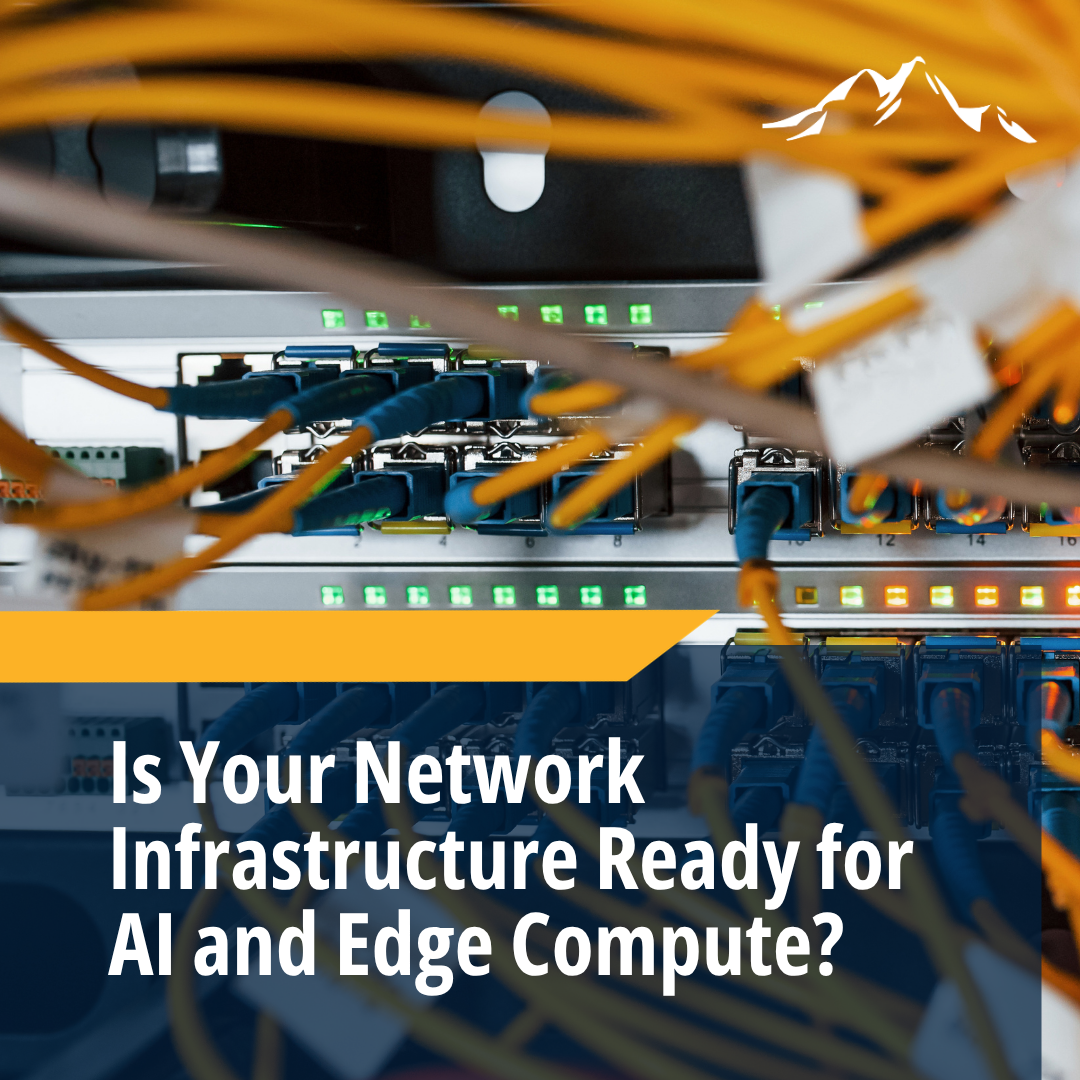
AI infrastructure planning often starts with new construction before operators ever verify existing network capacity. Where should new capacity go? How much space will it take? What facilities need to be expanded? Answers to those questions can quickly become expensive and time-consuming.
For broadband operators, there’s a more practical question to answer first: What can the network facilities you already own support?
Hubs, headends, ISP facilities, and regional data centers already place infrastructure across the communities operators serve. While not every AI workload belongs at the edge, this distributed footprint may offer more flexibility in capital and technical planning.
That makes facility evaluation the logical starting point. Operators need to know where usable capacity exists, where physical constraints limit it, and which sites justify additional investment before they decide what to build.
Why Should Broadband Operators Evaluate Existing Facilities First?
The condition of existing facilities can materially change the scope and cost of an AI or edge compute program. A verified view of available space, power, cooling, connectivity, and installed equipment can show where current capacity is usable, where targeted upgrades may be enough, and where new construction is actually warranted.
The International Energy Agency reports that global data center electricity demand grew 17% in 2025, while electricity consumption from AI-focused data centers increased 50%.
The same 2026 analysis notes that the scale of data center investment increasingly requires capital-market financing rather than relying on company balance sheets alone. For broadband operators, that capital intensity adds another reason to understand existing capacity before committing resources to expansion.
More demand puts greater weight on basic infrastructure questions:
- Where is power available? What can the cooling system handle?
- Is there enough physical space?
- Can the network support the required connectivity and latency?
Broadband operators that can answer those questions across an existing footprint have more options than teams starting with a blank site plan.
What Makes Network Infrastructure AI-Ready?
A facility is AI-ready when its verified physical capacity and network capabilities match the requirements of the proposed workload.
| Area to Evaluate | What Operators Need to Know | Why It Matters |
|---|---|---|
| Rack and physical space | Occupied and available rack units, floor space, equipment placement | Determines whether additional compute can physically fit |
| Installed equipment | What is present, active, unused, or scheduled for replacement | Establishes what space may actually be available |
| Power | Current load, available capacity, distribution limits | Determines whether the site can support additional equipment |
| Cooling | Existing system, thermal limits, available cooling capacity | Determines whether added compute density is practical |
| Facility constraints | Access, room layout, physical restrictions, operating requirements | Identifies limitations that may affect deployment |
| Network connectivity | Transport capacity, redundancy, latency, and upstream connectivity | Helps determine which workloads fit the site |
AI-readiness may also vary substantially by use case. AI training, distributed inference, GPU hosting, network applications, and other compute workloads do not place identical demands on a facility.
That is why capacity planning should begin with the workload and work backward into the infrastructure.
Why Aren’t Facility Records Enough to Determine Available Capacity?
System records tell operators what should be installed. Capital planning depends on what is actually there.
Hubs and headends rarely remain static. Teams install new equipment, relocate hardware, repatch connections, complete technology refreshes, and retire older assets over years of operation. The physical environment can change faster than DCIM, OSS, spreadsheets, and other records get updated.
A record that shows an open rack position does not necessarily prove that usable space exists. Likewise, equipment can remain in a system of record after it has left the facility.
That gap becomes much more important when the question changes from routine inventory management to, “Can this site support GPU hosting or another new compute workload?”
pureIntegration’s VIA Racked solution addresses that inside-plant problem by using front and rear rack imagery to identify equipment, map rack-unit position, and reconcile findings against DCIM or OSS records. Engineers review findings before delivery, so the output becomes a verified baseline rather than raw model detection.
The objective is bigger than correcting an inventory list. Accurate inventory records establish a physical baseline for capacity, refresh, migration, hosting, and investment decisions.
How Should Operators Evaluate Existing AI and Edge Compute Capacity?
A useful assessment connects the intended workload to a verified view of the infrastructure already in place.
First, define the workload. Teams need to understand the compute, power, cooling, connectivity, latency, resilience, and operational requirements associated with the intended use case.
Next, establish the current physical baseline. Confirm what equipment occupies the facility today, how much rack and floor space remains, and whether the system of record matches the site.
Then compare available capacity with facility constraints. Empty space alone does not make a site viable if power or cooling cannot support additional equipment. Strong network connectivity cannot compensate for a room that cannot accommodate the hardware.
Finally, compare facilities across the footprint. The useful output is not simply a better inventory. It is a clearer view of which sites fall into four practical categories:
- Use what exists
- Make a targeted upgrade
- Rule out the site for the proposed workload
- Consider new capacity
That turns infrastructure information into a capital-planning tool.
Can Infrastructure Intelligence Reduce the Effort Required to Assess Capacity?
Infrastructure intelligence can reduce broad manual discovery by helping teams identify where deeper investigation deserves time and budget.
pureIntegration has already applied this solution at significant scale (over 300,000 accounts). Our current Infrastructure Intelligence program reports audit work completed 5–10x faster than traditional field audits, and a 30–60% cost reduction compared with traditional methods.
Those figures come from pureIntegration’s broader outside-plant infrastructure work, where VIA Detect combines computer vision, imagery analysis, GIS alignment, and engineer review to validate infrastructure for planning, reporting, and compliance.
For inside-plant work, VIA Racked applies the same record-versus-reality discipline to racks and equipment, with findings validated by experienced engineers.
That approach gives planning and engineering teams a way to examine multiple facilities without turning every capacity question into a lengthy manual inventory exercise.
How Does Better Infrastructure Visibility Improve Capital Planning?
Accurate infrastructure information changes the decision from “Where can we put more equipment?” to “Where does investment make sense?”
Operators can identify sites where existing rack, power, cooling, and network capacity may already support the proposed workload. They can also separate those facilities from locations that require a manageable upgrade and those where physical limitations make further investment unattractive.
This gives planning and engineering teams a stronger basis for prioritizing capital. It can also prevent resources from being committed to a site before a constraint surfaces later in design, procurement, or deployment.
The same baseline has value beyond a single AI project. Once an operator has a clearer picture of installed equipment and facility conditions, that information can also support technology refreshes, decommissioning, migration planning, capacity management, and future network programs.
In that sense, the assessment should not end as a one-time audit report. A verified baseline can keep informing capital and operational decisions as the network changes.
FAQs About AI and Edge Compute Facility Readiness
Can a broadband headend support AI or GPU hosting?
Potentially. A headend may be a viable candidate if it has enough physical space, power, cooling, network connectivity, and operational capacity for the intended workload. The answer depends on the specific facility and the type of AI or compute workload being considered.
What is the difference between a rack audit and a facility capacity assessment?
A rack audit establishes what equipment is physically installed, where it sits, and whether asset records match the facility. A broader capacity assessment uses that verified baseline alongside power, cooling, connectivity, space, and other facility constraints to determine what the site can realistically support.
Do broadband operators need a DCIM system before evaluating facility capacity?
No. An existing DCIM or OSS can provide a useful record for comparison, but operators can still establish a verified infrastructure baseline when records are incomplete or no reliable DCIM exists. In those cases, the verified rack inventory can establish the baseline and provide a starting system of record.
How can operators determine which network facilities to evaluate first?
Start with the facilities that best align with the intended workload and business objective. Network location and connectivity may narrow the candidate list first. From there, operators can compare physical space, installed equipment, power, cooling, and facility constraints to identify which sites warrant deeper engineering analysis.
How Does pureIntegration Evaluate AI-Ready Network Infrastructure?
pureIntegration works with cable, broadband, and telecom operators to help network and infrastructure teams understand the assets they already own and the workloads individual facilities can support.
That includes validating the physical environment, reconciling infrastructure against existing records, identifying constraints, and turning those findings into information engineering and planning teams can use.
For inside-plant assessments, VIA Racked turns front and rear rack imagery into a reconciled equipment inventory. The process identifies equipment and rack-unit position, compares findings with DCIM or OSS records, flags discrepancies, and routes results through experienced engineers before delivery.
The resulting baseline gives planning and engineering teams a consistent view of what is physically in each facility before they evaluate capacity or investment options.
Want to know what your existing facilities can support? Talk with our team about where to start.
| pureIntegration will be at SCTE TechExpo26 in Atlanta, September 29 through October 1. If AI-ready capacity, infrastructure intelligence, or edge compute is part of your 2027 roadmap, schedule time with our team to discuss what may already be possible across your existing network footprint. |
Subscribe to Updates
Categories
- 2024 (1)
- 2026 (1)
- AdRamp (1)
- AdTech (4)
- approval process (1)
- Archive (7)
- Artificial Intelligence (9)
- BEAD (3)
- Blog (42)
- Broadband (4)
- Broadcast (1)
- Clayton LiaBraaten (1)
- Cloud (2)
- connected businesses (1)
- ContentCheck (6)
- Credit Unions (1)
- Data Center Automation (4)
- Data Measurement (2)
- Digital Business Transformation (10)
- Digitize (1)
- Diversity (1)
- DSP Enablement (1)
- eBooks (1)
- energy (1)
- Events (2)
- Factsheet (6)
- FCC (1)
- female executive (1)
- Female Executives (1)
- finance approval (1)
- financial approval (1)
- Healthcare (1)
- Internet of Things (3)
- internet of things (1)
- iot service (1)
- it project (1)
- IT Service Management (5)
- Jeff Puzenski (1)
- low power wide area network (1)
- Machine Learning (1)
- MDU (1)
- Media Ad Sales (1)
- Mobile & Connectivity (2)
- Multiple-Dwelling Unit (1)
- NAB (4)
- network infrastructure audit (1)
- News (7)
- observability (3)
- OPED (1)
- OpenTelemetry (1)
- optimization (1)
- OSP (1)
- Partnership (2)
- Podcast (1)
- Political (2)
- RDOF (2)
- Resources (7)
- SCTE (2)
- service (1)
- smart city (1)
- Streaming (2)
- Synthetic Monitoring (1)
- taas (1)
- TME stack (1)
- Unified Observability Platform (3)
- UOP Synthetics (1)
- VIA (9)
- Video (3)
- Video Verification (1)
- Virtual Infrastructure Audit (5)
- White Papers (2)
- women in business (1)
- Worksheet (1)
Recent Posts
- pureIntegration Expands Infrastructure Intelligence to Assess AI-Readiness in Legacy MSO & Telco Facilities
- Is Your Network Infrastructure Ready for AI and Edge Compute?
- How to Choose the Right MVNO Partner
- Why Mobile Is No Longer Optional for Broadband Providers
- Avoid the Wrong Call - 7 Red Cards That Can Sideline Your AdTech, AI, and Media Operations